venerdì 27 febbraio 2015

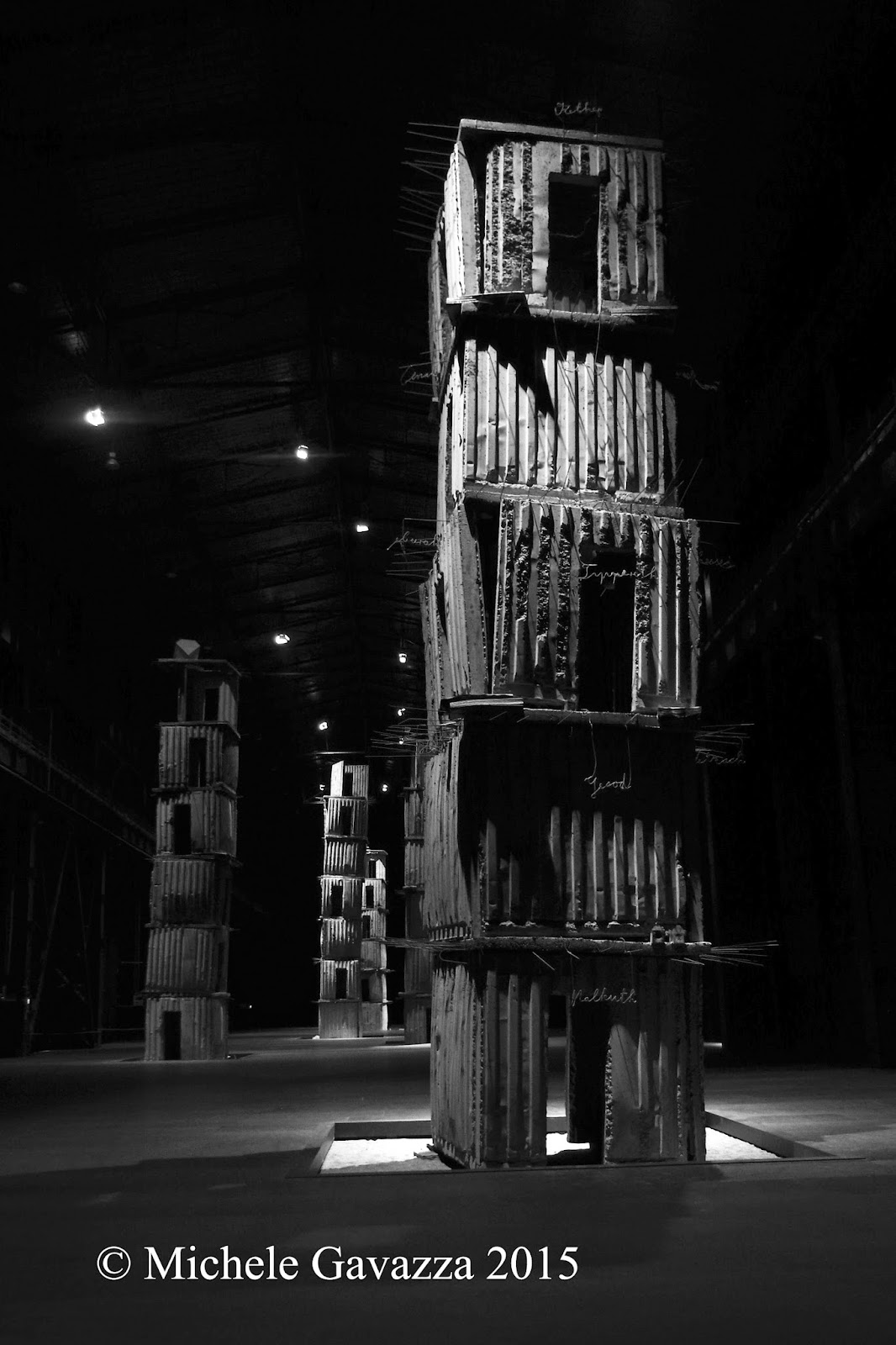
Hangar Bicocca - The Seven Heavenly Palaces


Anselm Kiefer

The Seven Heavenly Palaces
The site-specific The Seven Heavenly Palaces installation, created for HangarBicocca in 2004, is one of the most important works by the German artist Anselm Kiefer. It takes its name from the palaces described in an ancient Hebrew tract, the Sefer Hechalot or "Book of Palaces", which describes the symbolic path of spiritual initiation of those who wish to enter into the presence of God. The work represents the culmination of Kiefer's entire artistic career, summing up his main themes and projecting them into a new, timeless dimension.
This can be seen in the way it interprets an ancient religion (Judaism) and represents the ruins of the West after the Second World War. It also shows us a projection into a possible future, from which the artist invites us to look back at the ruins of our own present. The seven towers, which weigh 90 tonnes each and vary in height between 14 and 18 metres – are made of reinforced concrete, using the corner units from goods containers as construction modules. Their forerunner is the La Ribotte project in Barjac, in the South of France, where the artist lived from 1993 to 2007. This consists of buildings, passageways and tunnels that wind their way across a vast area of the French countryside.


                      www.hangarbicocca.org

giovedì 18 dicembre 2014

Chanukká a Milano - Chanukkah in Milan

Lunedì 15 dicembre ho assistito a Milano all'allestimento del candelabro ebraico a 9 braccia, allestimento curato da una ditta di Casale Monferrato (AL), che se ne occupa dal 1990. La festa ebraica della Luce:  http://it.m.wikipedia.org/wiki/Chanukkah


lunedì 18 agosto 2014

Expo 2015 - Milan in Middle Ages part 01

Piazza Mercanti[1] ("Merchants Square") is a central city square of Milan, Italy. It is located between Piazza del Duomo, which marks the centre of the modern city of Milan, and Piazza Cordusio, and it used to be the heart of the city in the Middle Ages. At the time, the square was larger than it is now (as part of it has later become what is now Via Mercanti, the street located between Palazzo dei Giureconsulti and Palazzo della Ragione) and known as "Piazza del Broletto", after the "Broletto Nuovo", the palace that occupied the centre of the square (now on the north side). In the 13th century, there were six entry points to the square, each associated to a specific trade, from sword blacksmiths to hat makers.
Until the late 19th century, Oh bej! Oh bej! (the most important and traditional fair of Milan) was held in Piazza Mercanti.


sabato 16 agosto 2014

Expo 2015 - Milan: Corn fields in Piazza Castello

More than 1500 plants for almost 2 meters high in the lush corn field of 360 square meters that mark between the two pavilions of Expo Gate in via Beltrami, in front of the Castello Sforzesco in Milan. Quantomais-this is the name of the installation commissioned by Expo Gate, is designed and built by studio A4A Revolt Savioni Architects by invitation of the curator of Expo Gate Caroline Corbetta.

giovedì 24 aprile 2014

Tortona District in Milan

Tortona District

The area between the Naviglio Grande and Via Solari, which during the 1920s became a genuine district of creativity, has preserved in a rather unique context historical memories of the Agrarian Age, of the 19th Century urban fabric and of the subsequent industrial age, with the factories and homes for the workers. Following the closing down and moving of the production activities, the abandoned factories were converted into workshops, studios, schools and showrooms, attracting new activity and giving a new character and a new image to the area. This is the case of the Pomodoro Foundation, Armani Theatre, Superstudiopiù and the Scala Ansaldo Workshops. Today, in fact, the "Via Savona - Via Tortona and surroundings" area is distinguished by the cohabitation of traditional production activities, innovative functions, linked to culture, communication and image, and homes such as in Bergognone 53, the result of the conversion of the former Post Office Building.
Armani Theatre This facility was inaugurated in 2001, in an area of approximately 12,000 square metres where the Nestlé Complex once stood, which was a complex of buildings erected after WWII, without any particular features of architectural value. The Armani Theatre and the spaces for meeting with the public, which cover a total of 3,400 m2, were designed by the famous Japanese architect Tadao Ando, whereas for the outlets and showrooms, Giorgio Armani benefited from contributions by Michele De Lucchi and Giancarlo Ortelli. The materials in Ando's project, cement, water and light were used exclusively within the original outer shell of the building. A 100-metre long corridor, on a slight tilt to accentuate its length and marked by think square columns, crosses the entire structure and guides the visitor along an emotional path inside the building.